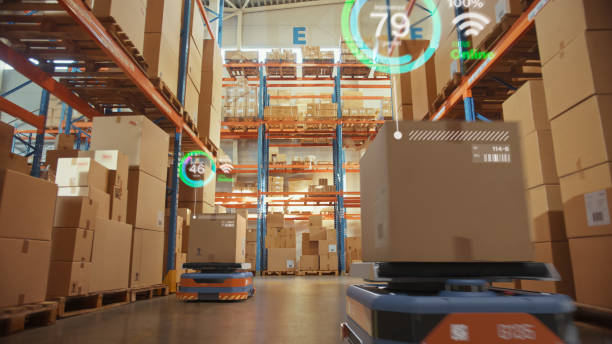
In recent years, the logistics industry has undergone significant and inevitable changes. One of the most significant transformations has occurred in logistics warehouses.
Warehouses are now more than just storage spaces for goods; they serve much more than that. With digital technology, automation, and advanced management systems, a logistics warehouse revolution has emerged, facilitating the comprehensive management of incoming and outgoing goods.
This change is not only about efficiency, but also about speed, accuracy, and adaptability to increasingly changing and volatile market needs.
What is the Logistics Warehouse Revolution?
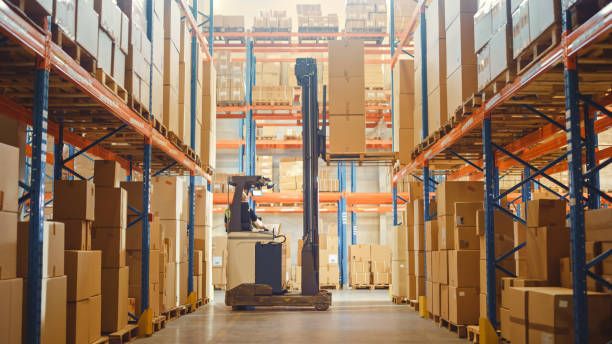
The logistics warehouse revolution can be defined as the process of transforming conventional warehousing systems into more modern, technology-based ones.
This transformation is due to various innovations such as WMS, the Internet of Things, automation, robotics, and the use of data analytics.
Previously, warehousing was handled solely by human labor, including data recording. Today, modern warehouses can monitor inventory quickly and in real time, including automatically managing the flow of goods.
Factors in the Logistics Warehouse Revolution
This change is driven by several key factors, such as:
- The continued growth of e-commerce, resulting in an increase in online transactions, necessitating faster and more accurate storage and shipping processes.
- The demand for cost efficiency without sacrificing operational costs.
- The development of digital technology that supports the advancement of faster and more integrated warehouse systems.
- Increasing market and business competition necessitates speedy distribution to meet customer needs, which ultimately determines customer satisfaction.
Benefits of the Logistics Warehouse Revolution
Some of the benefits of modern logistics warehouse transformation include:
- The implementation of automation in the warehouse will impact the accuracy of shipping and storage processes, resulting in higher operational efficiency.
- The use of technologies such as barcodes and RFID allows for real-time inventory recording and inventory monitoring, thus avoiding errors in recording and managing goods.
- Although requiring high initial investment, modern logistics warehouses can reduce labor costs and increase storage space efficiency.
- Storage capacity can be adjusted according to market demand, making them more flexible and scalable.
- A fast and accurate distribution process will increase customer satisfaction.
Challenges in the Logistics Warehouse Revolution
- The first challenge in implementing technology in the logistics warehousing revolution is the high investment required. Implementing advanced technology in warehouses requires significant initial costs, especially for small and medium-sized service companies.
- Changing the use of technology requires experienced and skilled human resources. Training and adaptation are key to optimally utilizing technology.
- Integrating warehouse systems with other systems, such as ERP and logistics transportation, is a complex process.
- The digitalization of modern warehousing poses data security risks. Therefore, data protection is essential.
The Future of Logistics Warehouses in the Digital Era
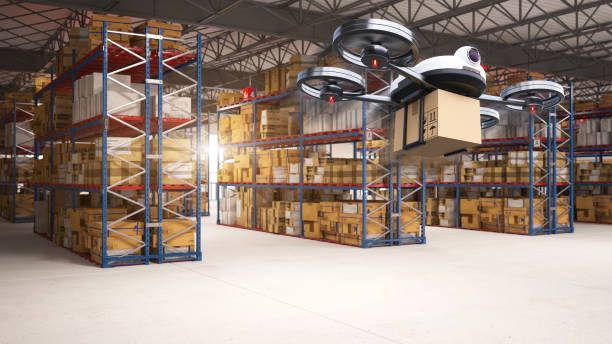
Today, modern logistics warehouses increasingly utilize intelligent technologies, such as artificial intelligence (AI) and big data. Their function is to facilitate demand prediction and optimize inventory and storage. Warehouses are no longer simply storage for inventory; they are vital assets to support business growth.
Conclusion
The revolution in logistics warehouses is part of the transformation to simplify and improve modern distribution processes. By implementing the right technology and management systems, service companies can create efficiency, save costs, and provide the best service to customers.
With professional customs personnel, TB Global Group subsidiaries are ready to provide safe, reliable, and timely delivery of goods.


